

Cart
0


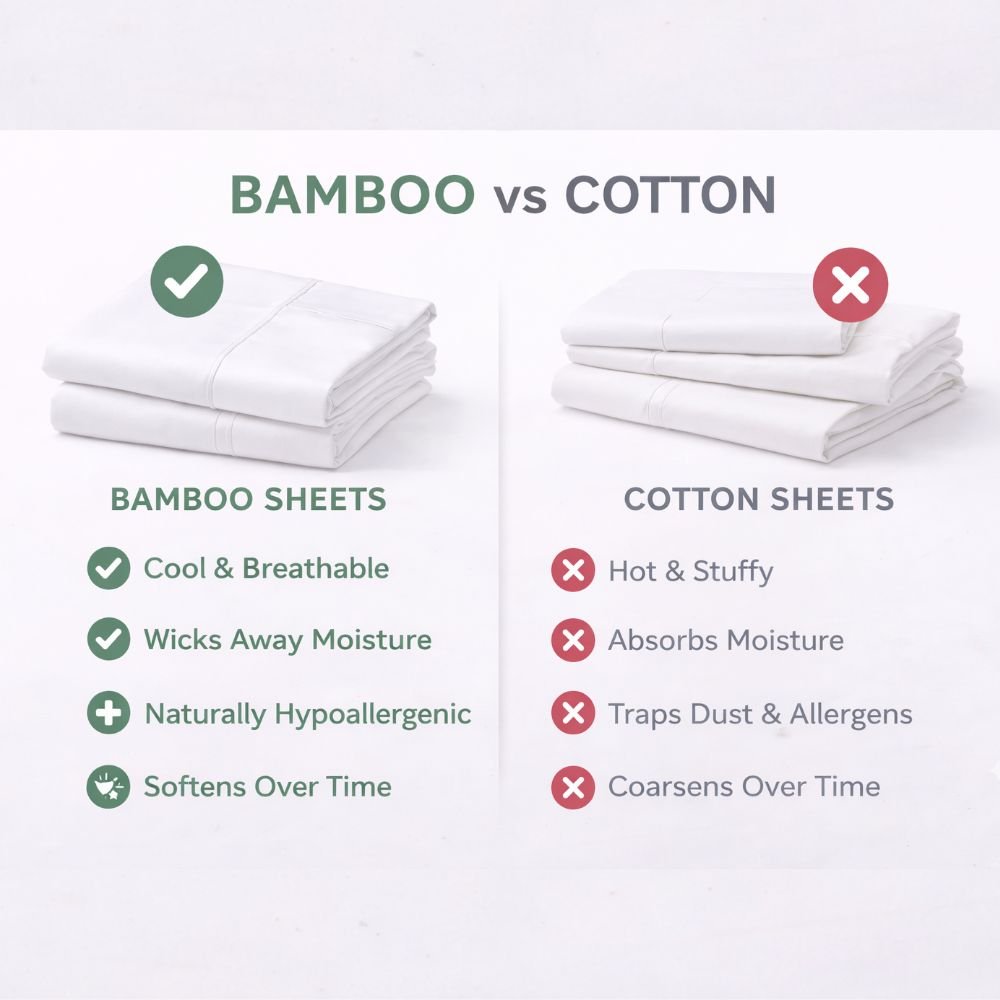
If you wake up hot, kick off the covers at 2 a.m., or notice your sheets feel rougher every month, asking is bamboo lyocell better than cotton is not a trend-driven question. It is a practical one. The fabric against your skin shapes temperature, moisture, comfort, and even how restful your bedroom feels night after night.
The short answer is that bamboo lyocell can be better than cotton for many sleepers, especially if you prioritize cooling comfort, a smoother hand feel, and a cleaner fiber story. But cotton still has strengths, and the right choice depends on how you sleep, what quality level you are comparing, and whether performance matters more to you than familiarity.
Is bamboo lyocell better than cotton for sleep?
For many people, yes. Bamboo lyocell tends to feel cooler, silkier, and more moisture-managing than traditional cotton bedding. That combination matters if you sleep warm, live in a humid climate, or want your bed to feel polished and breathable rather than crisp and dry.
Cotton, by contrast, covers a very wide range. A basic cotton sheet set and a long-staple cotton sateen should not be treated as the same product. Good cotton can be comfortable, durable, and breathable. The issue is that even premium cotton often feels heavier and less fluid than bamboo lyocell, and it may not regulate heat and moisture with the same ease.
That is why the comparison works best when you look beyond fiber names and focus on performance in real life.
Feel on the skin: where bamboo lyocell usually wins
The first difference most people notice is texture. Bamboo lyocell has a remarkably smooth surface that creates that draped, serene cascade many luxury shoppers are looking for. It feels soft immediately, without the break-in period some cotton sheets require.
This smoother structure can also be gentler on sensitive skin. If you are prone to irritation, dryness, or friction discomfort, bamboo lyocell often feels calmer and less abrasive. That does not mean every cotton sheet is harsh. High-quality cotton can be very comfortable. But cotton generally has a more matte, fibrous touch, while bamboo lyocell feels more refined and fluid.
For shoppers upgrading their sleep environment, this distinction is not minor. It is the difference between bedding that feels acceptable and bedding that feels restorative.
Cooling and moisture control
If overheating is your biggest sleep complaint, this is where bamboo lyocell makes its strongest case. The fiber is known for excellent moisture management and a cooler-to-the-touch feel, which can help reduce that trapped-heat sensation many sleepers experience under heavier or denser fabrics.
Cotton is breathable, but breathability alone is not the whole story. A fabric can allow airflow and still hold onto moisture in a way that leaves you feeling damp or warm. Bamboo lyocell tends to move moisture more efficiently, which helps the bed feel fresher through the night.
That matters for hot sleepers, couples who generate more body heat, and anyone dealing with seasonal humidity. If your goal is premium comfort with measurable performance, bamboo lyocell often outperforms cotton in this category.
Is bamboo lyocell better than cotton for sensitive skin?
Often, yes. Sensitive-skin shoppers usually care about two things: how a fabric feels and how it is processed. Bamboo lyocell performs well on both fronts when it is produced responsibly.
Its smoothness can reduce friction against the skin, which is helpful for people who notice redness, itchiness, or irritation from rougher bedding. Just as important, quality bamboo lyocell products are often positioned around cleaner processing standards and certifications that speak to chemical safety.
Cotton can still be a good option, especially organic cotton or well-finished premium cotton. But conventional cotton bedding is not automatically the cleaner choice people assume it is. Farming inputs, finishing treatments, and dye processes all matter. In other words, fiber type alone does not tell the whole story. The manufacturing standard matters just as much.
Durability and everyday use
Cotton has long held a reputation for durability, and in many cases that reputation is deserved. Good cotton sheets can last for years, especially when woven well and cared for properly. They also tend to be familiar and easy for consumers to understand.
Bamboo lyocell, however, should not be mistaken for a delicate luxury that sacrifices function. Well-made bamboo lyocell bedding can hold up beautifully while maintaining its softness better over time than some cotton options that begin crisp and gradually turn coarse.
The main caveat is care. Premium bedding of any kind benefits from gentler washing and lower heat. If someone wants a fabric that can tolerate frequent high-heat laundering with little thought, cotton may feel more forgiving. If someone wants elevated softness and performance and is willing to care for it accordingly, bamboo lyocell is often the more rewarding choice.
Sustainability: the answer depends on the process
This is where the conversation needs more precision. People often hear that bamboo is sustainable and stop there. That is too simplistic. Bamboo as a raw material can be fast-growing and resource-efficient, but the environmental profile of the finished fabric depends heavily on how that fiber is processed.
Bamboo lyocell is distinct from older bamboo viscose methods. In a lyocell process, the goal is a cleaner, more controlled production system that relies on more advanced solvent recovery and less wasteful chemistry. That is one reason premium bedding brands place so much emphasis on the difference.
Cotton also has a mixed sustainability record. Conventional cotton can be resource-intensive, particularly around water use and agricultural inputs, while better-grown and organic options can improve that picture.
So is bamboo lyocell better than cotton environmentally? It can be, especially when produced to high standards. But the honest answer is that not all bamboo fabrics are equal, and not all cotton is the same either. Responsible sourcing and certified processing make the real difference.
Price and value
Cotton usually gives shoppers a broader price range. You can find it everywhere, from entry-level basics to true luxury. Bamboo lyocell typically sits higher in the market, especially when the fabric is authentically lyocell rather than a lower-grade bamboo alternative marketed with vague language.
That higher price can be justified if you value the combination of softness, cooling performance, moisture control, and an elevated finish. For many shoppers, especially those who have already cycled through cotton sets that looked good but slept warm, the value becomes obvious after a few nights.
Premium bedding should not just decorate the bed. It should improve sleep. That is the lens through which the price conversation becomes more meaningful.
Who should choose bamboo lyocell?
Bamboo lyocell is often the stronger choice for hot sleepers, people with sensitive skin, and anyone building a bedroom around wellness rather than simple utility. It also appeals to shoppers who want their bedding to feel luxurious without becoming heavy or overly glossy.
Cotton may still be the better fit for someone who prefers a crisper, more traditional sheet feel, wants the widest variety of finishes and price points, or simply loves the familiarity of classic cotton percale or sateen.
The key is not asking which fabric is universally superior. It is asking which one performs better for your body and your sleep environment.
The better question is what kind of cotton and what kind of bamboo
A fair comparison is never bamboo versus cotton in the abstract. It is high-quality bamboo lyocell versus the specific cotton product you are considering. A premium lyocell sheet set will likely outperform basic cotton by a wide margin. Against exceptional cotton, the gap narrows, but bamboo lyocell still often leads on softness, cooling, and moisture management.
That is also why material transparency matters. If a brand says bamboo, you should know whether it is truly lyocell, how it is made, and what standards support its claims. Verleu, for example, places that distinction front and center because the process is part of the product.
If you are investing in better sleep, you deserve more than a fiber buzzword. You deserve bedding that proves its value where it counts - against your skin, through the night, and after repeated washes.
Cotton will always have a place in the home. But if your priorities are cooler sleep, smoother comfort, and a more refined performance fabric, bamboo lyocell is often the better answer. The most useful test is simple: choose the material that makes your bedroom feel less like a place to collapse and more like a place to recover.


