

Cart
0

Waking up at 2:17 a.m. because your chest feels hot, your sheets feel damp, and the cool side of the pillow has already lost the battle is not a small inconvenience. If you are searching for how to stop overheating at night, the answer is usually not one dramatic fix. It is a series of material, environment, and habit choices that either trap heat or let your body release it properly.
That distinction matters because many people assume they are simply “hot sleepers” and have to live with it. In reality, the bedroom system around you plays a major role. Your bedding, pajamas, mattress, room temperature, humidity, and even your evening routine can either support temperature regulation or quietly work against it.
Why overheating at night happens in the first place
Your body is designed to cool down as part of the sleep process. Core temperature naturally drops in the evening to help signal sleep onset, then continues to shift through different sleep stages. When your sleep environment holds onto heat and moisture, it interrupts that process. You may fall asleep tired enough to ignore it, but your body notices.
Overheating at night often comes from a combination of factors rather than one obvious cause. Heavy comforters, synthetic sheets, foam mattresses with low airflow, warm rooms, alcohol before bed, hormonal changes, certain medications, and stress can all contribute. That is why generic advice like “keep your room cooler” sometimes helps a little but does not solve the full problem.
It also depends on whether your issue is heat, sweat, or both. Some people primarily retain heat under dense bedding. Others sweat quickly because moisture has nowhere to go. The best setup addresses both temperature regulation and moisture management, because a fabric that feels soft but traps humidity can still leave you waking up clammy.
How to stop overheating at night by fixing your bedding
The fastest place to look is the layer that sits directly against your skin. Sheets and pillowcases have more influence than many people realize because they regulate the microclimate around your body for seven to nine hours at a time.
Natural performance fibers tend to outperform dense synthetics for hot sleepers, but not all “cooling” materials behave the same way. Some fabrics feel cold to the touch for a few minutes, then lose that advantage once they begin holding heat and moisture. Others work more consistently by improving airflow and wicking moisture away over the course of the night.
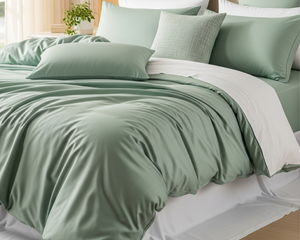
This is where fiber construction matters. Bamboo lyocell, for example, is prized in premium bedding because it is exceptionally smooth, breathable, and effective at managing moisture without the coated or slippery feel that some cooling textiles have. It helps create a sleep surface that feels dry, light, and calm rather than merely chilled on contact. For people with sensitive skin, that smoother hand can also reduce irritation caused by rougher or chemically processed fabrics.
Cotton can work well, but quality and weave make a difference. Crisp percale is generally cooler than heavy sateen. Linen is breathable but has a more textured feel that not everyone enjoys. Polyester blends are often the biggest culprit for hot sleepers because they tend to trap heat and humidity close to the body.
Your comforter also deserves scrutiny. Many people keep the same insert year-round, then wonder why summer sleep feels restless. If you sleep hot, a lighter-weight comforter or duvet insert usually works better than piling on a lofty fill that blocks ventilation. A layered bed is often more effective than a single heavy top layer because it gives you more control.
The bedroom climate matters more than most people think
If you want to know how to stop overheating at night, think beyond the bed itself. A beautifully made bed cannot fully compensate for a room that is too warm or too humid.
For most adults, cooler ambient temperatures support better sleep. That does not mean turning your bedroom into a refrigerator. It means aiming for a range that allows your body to release heat instead of fighting against the room. Many people sleep best somewhere around 65 to 68 degrees Fahrenheit, though personal comfort, bedding weight, and humidity all affect that sweet spot.
Humidity is the overlooked variable. A room that is only mildly warm can still feel oppressive if the air is heavy. Moisture in the air makes it harder for sweat to evaporate, which means your natural cooling mechanism becomes less effective. If your room feels muggy, a fan, air conditioning, or dehumidifier may make a more noticeable difference than lowering the thermostat alone.
Air movement helps as well. Gentle circulation keeps heat from stagnating around the bed and helps moisture dissipate. Even a ceiling fan on a low setting can improve sleep comfort, especially if your bedding is breathable enough to let that airflow do its job.
What to wear if you sleep hot
Sleepwear should help your body regulate temperature, not add another insulating layer. If you routinely wake up overheated, the issue may be your pajamas as much as your sheets.
Look for lightweight, breathable fabrics with genuine moisture-wicking properties. Tight-fitting synthetic sleepwear can trap warmth and sweat close to the skin, creating that sticky, uncomfortable feeling that wakes you up in the middle of the night. A looser fit in a smoother, more breathable fabric usually performs better.
Some people sleep coolest in minimal clothing. Others prefer coverage but need the right textile. It depends on your comfort level, your skin sensitivity, and whether your bedding already runs warm. The goal is not less fabric at any cost. It is less heat retention and better moisture release.
Evening habits that quietly raise body temperature
Sometimes the problem starts before you ever get into bed. If your routine pushes body temperature upward or disrupts normal sleep signaling, your bedding has to work harder to compensate.
Alcohol is a common example. It can make you feel sleepy at first, but it often increases flushing, sweating, and nighttime awakenings. Large meals close to bedtime can have a similar effect because digestion raises metabolic activity and body heat. Spicy food is another trigger for some people.
Exercise timing also matters. Movement is good for sleep overall, but a very intense workout right before bed can leave your body too activated and warm. If late workouts are your only option, allow enough time to cool down before getting under the covers.
A hot shower or bath can go either way. For some people, a warm bath 60 to 90 minutes before bed helps trigger a post-bath cooling effect that supports sleep onset. For others, especially in a warm climate or poorly cooled home, it simply adds more heat. Pay attention to your own pattern rather than assuming every sleep tip applies equally.
When night overheating may point to something else
Not every case of overheating is caused by bedding or room temperature. Hormonal shifts, menopause, illness, medications, thyroid issues, anxiety, and blood sugar fluctuations can all contribute to feeling too hot at night.
If overheating is sudden, severe, or paired with other symptoms, it is worth speaking with a healthcare professional. The same is true if you are changing your sleep environment thoughtfully and still waking drenched on a regular basis. Great bedding can improve comfort dramatically, but it should not be used to ignore a medical issue that needs attention.
That said, even when a health factor is involved, your sleep setup still matters. Better materials and better climate control can reduce the frequency and intensity of discomfort, giving your body a calmer environment while you address the root cause.
A smarter sleep system for hot sleepers
The most effective approach is not to hunt for a miracle product. It is to build a bedroom that works as a system. Start with breathable, moisture-managing sheets and pillowcases. Reassess your comforter weight. Lower room temperature if needed, but also address humidity and airflow. Then look at sleepwear and evening habits that may be raising your heat load.
This is also where premium materials justify their place. Luxury should not mean heavier, shinier, or more decorative if those qualities come at the expense of actual sleep performance. The best bedding feels elevated because it is engineered to do something measurable: stay breathable, wick moisture efficiently, remain gentle on skin, and hold that comfort night after night. That is the standard Verleu believes bedding should meet.
If you have been layering quick fixes on top of a heat-trapping sleep environment, start with the fundamentals closest to your body. Cooler sleep rarely comes from doing more. More often, it comes from removing what is holding heat where it does not belong, so your bedroom can finally feel as restorative as it looks.


