

Cart
0

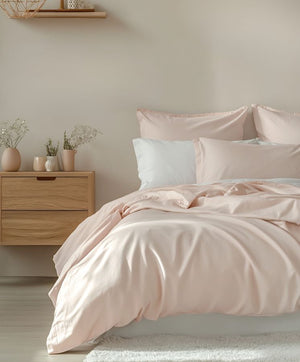
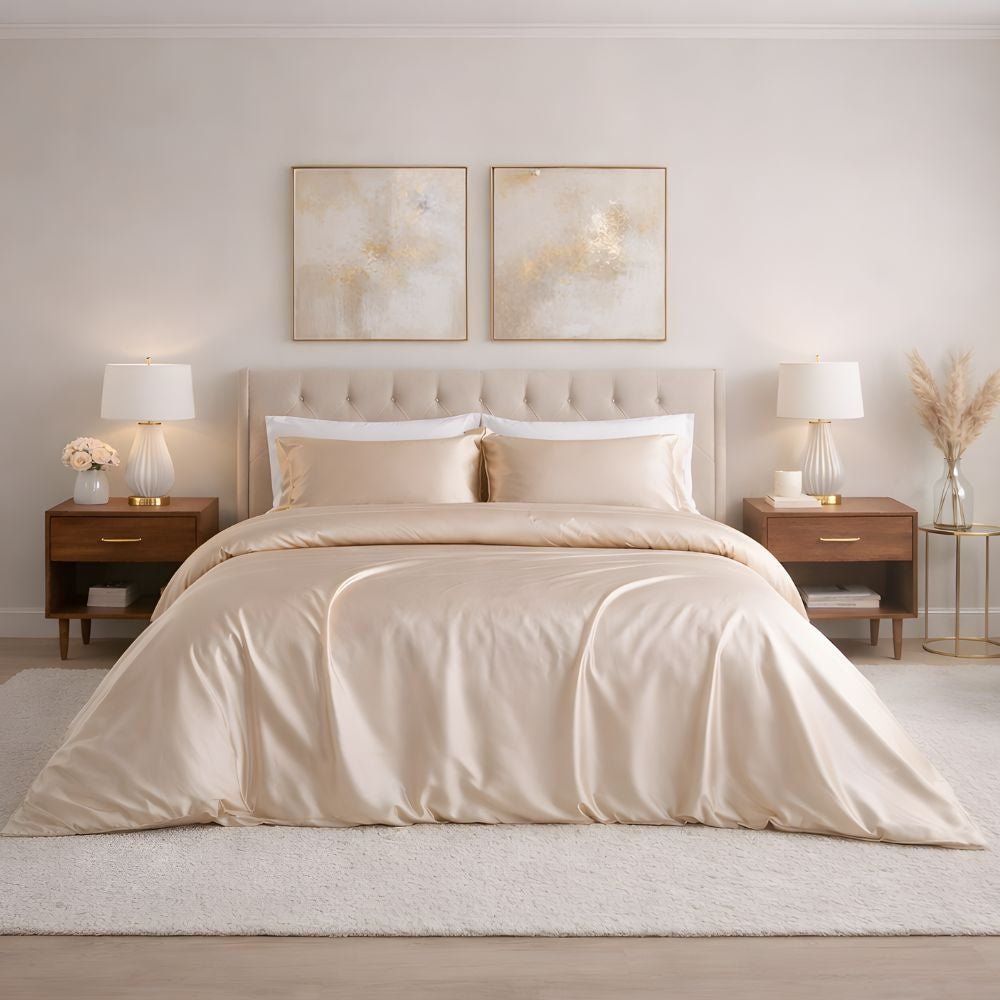
A beautiful bed can still be the wrong bed for your sleep. If you wake up warm, feel your sheets cling after a humid night, or notice irritation from fabrics that looked luxurious in the package, the fiber beneath the finish matters. These top luxury bedding materials explained clearly will help you choose for the way you actually sleep, not simply for the look you want.
Luxury is not one sensation. For some sleepers, it is the crisp, airy feel of linen. For others, it is silk's polished glide or the familiar softness of long-staple cotton. For hot sleepers and those with sensitive skin, it is often a fabric that actively manages moisture and feels gentle hour after hour. The best material is the one whose strengths align with your temperature, skin, climate, and preferred finish.
Top Luxury Bedding Materials Explained by Performance
Before comparing fibers, separate material from construction. Cotton, linen, silk, and bamboo-derived fibers each begin with distinct raw materials, but weave, weight, finishing, and chemical processing shape the sheet you bring home. A high thread count alone cannot tell you whether fabric will breathe, soften, pill, or hold heat.
Bamboo lyocell: cooling comfort with a refined drape
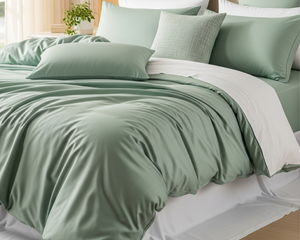
Bamboo lyocell is a regenerated cellulosic fiber made from bamboo pulp through a closed-loop manufacturing process that recovers and reuses the solvent. The result is a notably smooth, fluid fabric with an elegant sheen and a soft, serene cascade across the bed.
Its appeal goes beyond touch. Bamboo lyocell is highly absorbent, helping draw moisture away from the skin so the sleep surface feels drier when temperatures rise. Its smooth fibers also create less friction than coarser fabrics, a meaningful advantage for sensitive skin and anyone who prefers a polished, barely-there feel.
It is a particularly strong choice for warm sleepers, humid climates, and couples with different sleep temperatures. The trade-off is that it does not deliver the crisp snap associated with percale cotton or linen. It is designed for a more fluid, silk-like experience. Quality also matters enormously: bamboo lyocell should not be confused with bamboo viscose, which uses a more chemically intensive process and is often presented under similarly soft-sounding marketing language.
For a premium option, look for transparent fiber labeling and credible chemical-safety standards such as OEKO-TEX certification. A cleaner sleep environment should be part of the luxury proposition, not an afterthought.
Long-staple cotton: familiar, versatile, and dependent on weave
Long-staple cotton, including Egyptian and Supima cotton, earns its place in luxury bedding because longer fibers can be spun into smoother, stronger yarns. It is breathable, durable, and widely adaptable. Cotton can feel crisp and tailored in percale or smooth and warmer in sateen, which makes it one of the most versatile choices in the bedroom.
Its limitation is that “100% cotton” says very little on its own. Fiber length, yarn quality, finishing, and weave all influence performance. A dense sateen cotton sheet may feel sumptuous but can sleep warmer than a lighter percale. Cotton also absorbs moisture well, yet it may hold onto that moisture longer than more moisture-managing regenerated cellulosic fibers.
Choose long-staple cotton if you want a classic hand feel, dependable durability, and the ability to select a finish that suits the season. Percale favors sleepers who love cool crispness; sateen suits those drawn to a smoother, more luminous surface. Neither is automatically better. The question is whether you want structure or drape.
Linen: textured, airy, and exceptionally relaxed
Linen is made from flax, and its appeal is immediate for anyone who loves an effortless, lived-in bed. The fibers create a naturally textured fabric that feels airy and becomes softer with use. Linen's breathable nature and open, relaxed character make it a favorite in warm regions and for sleepers who dislike a close, slick fabric against the body.
The luxury of linen is less about pristine smoothness and more about character. It wrinkles readily, often feels more substantial at first than bamboo lyocell or cotton, and can take several washes to reach its softest state. Those are features for some people and compromises for others.
Linen is an excellent fit if you value texture, relaxed visual styling, and breathable comfort over a silky finish. It may be less ideal for people who want immediate softness, minimal wrinkles, or a lighter, more fluid layer around the body.
Silk: exquisite softness with a higher-maintenance reality
Silk is prized for its lustrous finish, lightweight warmth, and exceptionally smooth surface. It can feel cool at the start of the night and is naturally gentle against hair and skin, which explains its enduring appeal for pillowcases.
As full bedding, however, silk asks more of its owner. It is delicate, often requires specialized care, and can be less practical for everyday use in homes with pets, children, or a busy laundry routine. Its temperature behavior is nuanced, too: silk can insulate as well as breathe, so it is not always the clearest solution for a person who sleeps intensely hot.
Consider silk when tactile luxury and hair-and-skin benefits are the priority, especially for pillowcases. For a full bed that needs to perform through frequent washing and warm nights, a high-quality bamboo lyocell or cotton may offer a more practical balance.
TENCEL™ lyocell and other wood-based lyocells
Lyocell may also be made from wood pulp, commonly eucalyptus, rather than bamboo. Like bamboo lyocell, it belongs to the regenerated cellulosic family and is valued for smoothness, moisture absorption, and a soft drape. TENCEL™ is a branded lyocell fiber known for its controlled sourcing and production standards.
This category can perform beautifully, particularly for sleepers seeking a cool, silky hand feel. Still, material names should lead to more questions, not fewer. Ask what the fiber is made from, how it was produced, whether the fabric is certified for harmful substances, and how the final bedding has been finished. Transparency is a stronger signal of quality than a fashionable fiber name.
Why Bamboo Lyocell and Bamboo Viscose Are Not the Same
The terms are frequently blurred, but the manufacturing distinction is significant. Both begin with bamboo cellulose. Bamboo lyocell uses a solvent-spinning process designed to recapture the processing solvent in a closed loop. Bamboo viscose typically relies on a different conversion process involving more intensive chemical inputs.
That does not mean every bamboo viscose sheet feels poor. Many are very soft. But softness is not a full performance or safety standard. When investing in premium bedding, it is reasonable to expect clear disclosure around fiber type, certifications, and manufacturing approach. The material closest to your skin for eight hours a night deserves more scrutiny than a vague “bamboo” label.
How to Choose the Right Luxury Material for Your Bed
Start with the problem you want bedding to solve. If overheating and night sweats interrupt your rest, prioritize moisture management and a breathable, smooth construction. Bamboo lyocell is especially compelling here, while crisp percale cotton and linen can also work well depending on whether you prefer a fluid or textured feel.
If skin sensitivity is your central concern, focus on smooth fibers and independently verified chemical safety. Bamboo lyocell and silk are standouts for low-friction comfort, though silk's care needs may change the calculation. If you love a bedroom that looks relaxed rather than perfectly pressed, linen delivers a distinctive visual ease that no silky sheet should try to imitate.
Also think beyond sheets. A cooling fitted sheet paired with a heavy synthetic comforter may not create the temperature regulation you are seeking. The duvet cover, comforter fill, pillowcase, mattress protector, room temperature, and even sleepwear all influence the microclimate around your body. A considered sleep system performs better than one premium item working alone.
Finally, buy for the long term. Premium bedding should retain its softness, color, and comfort through regular laundering. Follow care instructions, avoid harsh bleach, and give yourself time to understand how a natural or regenerated fiber evolves after several washes. Linen relaxes. Quality cotton settles into softness. Bamboo lyocell maintains its signature smoothness when cared for gently.
A bed should feel like more than a styled surface at the end of the day. Choose the material that lets your body settle, your skin breathe, and your bedroom become the restorative space you intended it to be.


