

Cart
0



Your sheets rest against your skin for hours at a time, often when your body is warmest and most vulnerable to irritation. That is why chemical free bedding materials deserve more than a passing glance at a product label. For discerning sleepers, the question is not simply whether a sheet feels soft on the first night. It is whether the fiber, dyeing process, finishing treatments, and final product support a cleaner, cooler, more restorative sleep environment.
The phrase can be confusing, however. No textile exists outside of chemistry. Fibers are processed, dyed, washed, and sewn before they reach your bed. What matters is the standard behind the claim: thoughtful material selection, controlled manufacturing, and third-party testing designed to limit substances that should not be next to your skin. Premium bedding should be transparent about that distinction.
What “Chemical Free” Should Mean in Bedding
In bedding, “chemical free” is best understood as a commitment to avoid harmful or unnecessary chemical residues and treatments, rather than an absolute claim that no chemistry was involved at any stage. A well-made sheet still requires processing. The difference is whether that process relies on harsh inputs, leaves concerning residues, or uses shortcuts to manufacture softness, wrinkle resistance, or color.
Some conventional bedding may be treated with formaldehyde-based finishes for wrinkle resistance, chemical softeners for a slick hand feel, or intensive bleaching agents for a bright white appearance. These practices are not always apparent from the packaging. A fabric can look polished and feel smooth in a store while carrying a more complicated manufacturing story.
A cleaner approach begins with the fiber itself and continues through every finish applied to it. Look for bedding that clearly identifies its fiber content, explains how it is made, and carries independent certification for harmful substances. Vague language such as “natural,” “eco-friendly,” or “pure” can be appealing, but it is not a substitute for proof.
The Certifications That Give the Claim Meaning
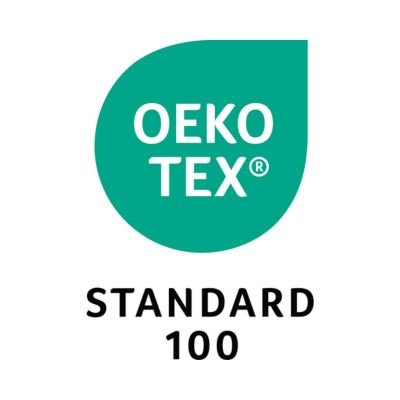
Third-party testing is one of the most practical ways to evaluate chemical free bedding materials. OEKO-TEX Standard 100 is among the most recognized certifications for finished textiles. It tests fabrics, threads, buttons, and other components for a broad range of potentially harmful substances, with stringent requirements for products that have direct skin contact.
That matters because bedding is not a decorative textile. It is a close-contact layer that surrounds you night after night. Certification does not mean a fabric is untouched by manufacturing, nor does it promise that every sleeper will respond identically to every textile. It does provide a meaningful level of assurance that the finished product has been evaluated against established safety criteria.
Other credentials may address separate concerns. Organic certifications focus on agricultural standards for raw materials such as cotton. Responsible forestry certifications can speak to the wood sources used for regenerated cellulosic fibers. These are valuable distinctions, but they are not interchangeable. A material can be organic yet lack finished-product chemical testing, or be tested for harmful substances without being organic. The strongest bedding decisions consider the full picture.
Why Fiber Choice Changes the Sleep Experience
Not all clean-minded bedding performs the same way. The fiber determines much of what you feel: breathability, moisture management, temperature regulation, durability, and how the fabric responds after repeated washing.
Cotton remains a familiar choice, especially when organically grown and responsibly finished. High-quality cotton can be breathable and comfortable, but its performance depends heavily on weave, staple length, finish, and weight. It can also hold moisture longer than some newer cellulosic fibers, which may be noticeable for hot sleepers or anyone who wakes up damp during the night.
Linen is another natural option with an airy, textured character. It excels in warm conditions and develops a relaxed softness over time. Its trade-off is a more casual look, a pronounced wrinkle profile, and a hand feel that may not suit sleepers who want immediate silk-like smoothness.
Bamboo lyocell offers a particularly compelling balance for people who want elevated softness without sacrificing performance. It is a regenerated cellulosic fiber made from bamboo pulp in a controlled manufacturing process. Unlike bamboo viscose, which typically uses a more chemically intensive process, bamboo lyocell is produced with a closed-loop solvent system that recaptures and reuses much of the processing solution.
The distinction is not a technical footnote. It affects how a brand should discuss both material integrity and environmental responsibility. “Bamboo” alone does not tell you how a fabric was made. Ask whether it is bamboo lyocell or bamboo viscose, then look beyond the fiber name to the certification and finished-product standards.
Chemical Free Bedding Materials for Sensitive Sleepers
If your skin is easily irritated, bedding can become an overlooked source of discomfort. Rough fibers, retained sweat, heavily fragranced detergents, and certain finishing treatments can all make a bed feel less serene than it should. While no fabric can diagnose or treat a skin condition, choosing a smooth, certified textile with fewer unnecessary treatments can help simplify your sleep environment.
Bamboo lyocell is naturally smooth at the fiber level, creating a refined surface that glides rather than catches against skin. Its moisture-wicking qualities can also be useful for sleepers who run warm, since damp, overheated bedding often feels more irritating than dry, breathable bedding. The goal is not to chase a miracle fabric. It is to remove avoidable friction, heat, and uncertainty from the place where you recover.
This is also where the rest of your routine matters. Even the finest certified sheets can be affected by strongly scented laundry products, fabric softeners, or dryer sheets. Wash bedding with a mild detergent, skip added fragrance when sensitivity is a concern, and avoid softening products that can coat fibers and diminish their natural breathability.
How to Shop Without Falling for the Label
A premium price does not automatically signal a cleaner product, and a low price does not always mean poor quality. The most useful approach is to read past the front-of-package promise.
Start with a precise fiber description. “Bamboo-derived” is broad. “100% bamboo lyocell” is more informative. Next, identify whether the brand names a recognized certification for the finished textile, not merely the raw fiber. Then consider the details that shape daily performance: weave, weight, cooling properties, care requirements, and whether the fabric is designed to become softer without relying on heavy softening finishes.
Be cautious with bedding marketed as permanently wrinkle-free, permanently scented, or exceptionally stain resistant without a clear explanation. Those benefits may be useful for some households, but they can involve treatments that do not align with a minimal-chemical sleep environment. There is no need to reject every performance feature outright. Just ask what makes it possible.
For hot sleepers, prioritize a breathable construction and effective moisture management over an inflated thread count. Thread count alone says little about fiber quality and can sometimes be increased through multi-ply yarns that create a denser, less airy fabric. A thoughtfully engineered bamboo lyocell sheet can feel cool, fluid, and substantial without being heavy.
Care That Preserves a Cleaner Bed
The life of chemical-conscious bedding does not end at checkout. How you care for it determines how long its comfort and finish endure. Wash sheets regularly in cool or warm water with a gentle detergent. Avoid chlorine bleach unless a manufacturer specifically approves it, and use low heat or line dry when possible to protect fibers from unnecessary stress.
Fabric softener is usually unnecessary for quality bamboo lyocell. It can leave a coating that reduces the fabric’s ability to move moisture efficiently and may interfere with the naturally smooth drape that makes lyocell feel so luxurious. With proper care, the fabric should retain its softness through repeated laundering rather than relying on additives to feel inviting.
A complete sleep sanctuary is built through small, considered choices: certified sheets, a breathable comforter, a well-ventilated bedroom, and laundry practices that respect the material. Verleu’s bamboo lyocell bedding is designed around that philosophy, pairing refined comfort with the measurable benefits that make a difference after the lights go out.
The best bedding should never ask you to choose between a beautiful bed and a better night’s sleep. Choose materials with a story you can verify, a feel you look forward to, and performance that lets your bedroom become what it should be: the quietest, cleanest part of your day.


