

Cart
0
Let’s be honest, most of us buy bedding based on a quick hand-feel in a showroom or a glossy, heavily filtered ad on our social feeds. We see terms like "100% Egyptian Cotton" or "Luxury Hotel Blend" and assume we’re buying a first-class ticket to dreamland. But then summer hits, or the apartment radiator kicks into overdrive, and suddenly you’re waking up at 3:00 AM drenched in sweat, flipping the pillow for the sixteenth time.
If you're tired of this cycle of night sweats, you've probably caught your eye on the internet's newest hot item made from organic bamboo bedding. Proponents say it solves everything from hot flashes to sensitive skin. But is it really better than traditional bedding options like cotton or polyester sheets, or is it just a clever eco-friendly marketing ploy? Let’s strip back the hype and look at the real data most brands try to hide.
What Is Organic Bamboo Bedding?
The dirty secret most bedding blogs won’t tell you is that many “bamboo” sheets are really just rayon or viscose. Some of the solvents used in turning a hard, woody bamboo stalk into a silky fabric are incredibly harsh. When a brand just says “bamboo viscose” or just “bamboo”, it’s often made using an open-loop system, which pollutes local waterways.
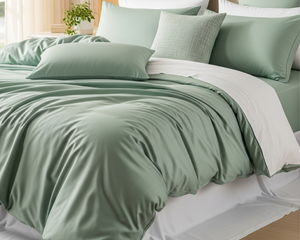
Organic bamboo bedding includes:
-
Bamboo sheet sets
-
Bamboo duvet covers
-
Bamboo comforters
-
Bamboo pillowcases
Organic Bamboo Bedding vs Traditional Bedding
When we pit these materials against each other, the differences become stark:
Feature |
Organic Bamboo Lyocell |
Traditional Egyptian Cotton |
Standard Polyester / Microfiber |
|
Breathability |
Ultra-high (Micropores vent heat) |
Medium (Absorbs but traps heat) |
Low (Synthetic plastic traps moisture) |
|
Water Footprint |
Minimal (Rain-fed, closed-loop) |
Massive (Extremely high-irrigation crop) |
High chemical/petroleum processing |
|
Chemical Input |
Zero pesticides required |
Uses 16% of global insecticides |
Entirely petroleum-based synthetics |
Comfort: Which Feels Better?
Comfort is highly subjective, but the physics of the fibers don't lie.
Traditional cotton has a convoluted, twisting fiber structure, giving it that crisp, structured, starched "hotel look." However, cotton depends entirely on high thread counts for softness, which inherently chokes out airflow. Over time, cotton can begin to feel stiff or scratchy.
advantages:
-
Perfectly smooth, round, micro-cylindrical fibers
-
A fluid, heavy drape that glides across your body without friction
-
A unique feel that combines the luxurious slip of genuine silk with the plush, broken-in comfort of cashmere
Temperature Regulation
If you sleep hot, this is where the battle is won.
Cotton is highly absorbent, but it holds onto moisture like a sponge. When you sweat, cotton sheets become damp and heavy, trapping heat against your skin. Polyester is even worse. As a synthetic plastic weave, it acts like a greenhouse layer over your mattress.
Organic bamboo bedding helps you stay cooler by:
-
Wicking moisture 40%–50% faster than cotton
-
Drawing moisture along the fiber surface for quick evaporation
-
Allowing continuous airflow through its natural micro-gaps
-
Keeping you up to 3 degrees cooler for a drier, more comfortable sleep
The result is no more clammy microclimate that can cause frequent night wakings.
Sustainability Comparison
Let's talk resource management. Cotton is a notoriously thirsty, high-maintenance crop that depletes soil nutrients and requires heavy seasonal replanting.
Bamboo is a self-regenerating grass that can grow up to 3 feet per day without a single drop of artificial irrigation or pesticide chemical assistance.
-
Water Savings: Cultivating bamboo uses up to 93% less water than traditional cotton farming.
-
Land & Air Efficiency: Bamboo produces 3,000% more fiber per acre than cotton and absorbs huge amounts of CO-2 while releasing 35% more oxygen than an equivalent stand of trees.
Long-Term Value: Is Bamboo Worth the Price?
Organic bamboo bedding often costs more upfront, but many shoppers overlook the long-term savings.
Consider this:
-
Better durability with proper care
-
Less pilling over time
-
Year-round comfort
-
Fewer replacements compared to lower-quality bedding
Instead of replacing inexpensive bedding every couple of years, investing in quality bamboo bedding may provide better value over its lifespan.
Which Bedding Is Better for Sensitive Skin?
People with allergies or sensitive skin often prefer organic bamboo bedding for its smooth texture and moisture-management properties.
Why many sleepers choose bamboo:
-
Smooth fibers that feel gentler against sensitive skin
-
Helps reduce moisture buildup for a drier, more comfortable sleeping environment
-
May minimize irritation caused by rough or coarse fabrics, especially during warmer months
Quick Buying Checklist
Before purchasing new bedding, ask yourself:
-
Do you sleep hot?
-
Do you experience night sweats?
-
Do you have sensitive skin?
-
Do you want bedding that works year-round?
If you answered "yes" to most of these questions, organic bamboo bedding is likely the better choice.
Final Verdict
If you are a pure stiff, structured, crisp hotel-style lover and don’t mind sleeping warm, traditional long-staple cotton will work for you.
But if you want a fabric that actually collaborates with your body’s sleep biology, lowers your home energy bills, protects sensitive skin & leaves a healthy planet behind, organic bamboo bedding is the clear winner. It’s a premium investment upfront, but your body & your wallet will feel the difference from night one.
Frequently Asked Questions
Are organic bamboo sheets slippery like silk?
They have a silky, beautiful, fluid drape but not that synthetic, glassy “slide”. You won't be waking up to find your pillows have slid off the bed in the dead of night.
Is organic bamboo bedding better than cotton?
For many people, yes. Organic bamboo bedding is generally softer, more breathable, and better at regulating temperature, while premium cotton remains a durable and familiar choice.
Does bamboo bedding stay cool all night?
Bamboo fabrics are known for their breathability and moisture-wicking properties, helping many sleepers feel cooler throughout the night.
Is organic bamboo bedding worth the higher price?
If you value comfort, durability, and sustainability, the higher upfront cost may offer better long-term value because quality bedding often lasts longer.


