

Cart
0
You kick off the covers at 2 AM. The sheets are damp. The pillow has no cool side left. You've tried the fan, the window, the thermostat - and you're still waking up overheated three nights a week.
The problem usually isn't the room. It's what's on the bed. Most sheets, duvets, and comforters are designed for the average sleeper - which means they're designed to retain warmth. For hot sleepers, retaining warmth is exactly the problem. The fix isn't lower thread count or a thinner duvet. It's fabric that moves heat and moisture away from your body rather than holding them in place. And the fabrics that do this are specific enough that it's worth knowing what they are before spending money on another set.
Why You Keep Overheating Even With the Window Open
Your core body temperature drops naturally during sleep. That drop is part of how your body initiates and maintains deep sleep - it's not incidental; it's physiological. Hot sleepers aren't necessarily running hotter than ordinary people. They're more sensitive to anything that interrupts that temperature fall.
Bedding creates two compounding problems. Standard cotton sheets absorb sweat but don't move it. Once they're damp, they hold moisture against the skin, creating a warm, wet layer at the body's surface. Then the duvet or comforter - if it's got any insulating weight to it traps the heat the body is trying to release. Damp surface, trapped heat. Each one makes the other worse.
This is why switching only the sheets often doesn't fix the problem. Replacing the sheet under a synthetic-fill duvet just moves the heat trap one layer up. The whole system has to breathe, not just one piece of it.
The Fabric Question - And Why "Breathable" Isn't Enough
Every sheet on the market claims to be breathable. It's the most useless word in bedding marketing, because it describes air passing through fabric in a lab condition, not what happens when a human body is generating heat and moisture against it for eight hours.
The quality that actually matters for hot sleepers is moisture management: whether the fabric pulls sweat away from skin and disperses it, or absorbs it and holds it in place. That distinction separates fabrics that cool you down from fabrics that just don't suffocate you.
Cotton is where most people start, and many stay too long. Percale-weave cotton is genuinely breathable and handles normal sleeping temperatures well. The problem shows up when sweat arrives - cotton absorbs it passively and then holds it. A damp cotton sheet stays damp. Sateen-weave cotton, the smooth variant on most "luxury" labels, is actually worse for hot sleepers because its tighter weave restricts airflow more aggressively than percale. Higher thread counts make this worse, not better: denser weaves trap more heat.
Egyptian cotton and Pima cotton with their longer fibers delay the moisture problem. They don't solve it.
Linen is the strongest natural option for raw airflow. Its hollow-core flax fibers let heat pass through rather than accumulate, which is why it's been the default bedding in hot climates for thousands of years. For some hot sleepers, it's the right answer. For others, it asks too much. It starts scratchy noticeably and takes many washes to soften. It wrinkles heavily. And quality linen sheets run $150-$300 for a queen set before you've established whether the texture suits you.
Bamboo lyocell manages moisture differently from both. The fiber structure creates micro-channels that pull perspiration away from the skin and release it into the air - actively, not passively. It's roughly 50% more absorbent than cotton, and unlike cotton, it doesn't hold that moisture against the body. The result is a consistently drier sleep surface, which is the closest bedding can get to keeping you cool.
One distinction here matters: most bamboo sheets are viscose, not lyocell. Bamboo viscose is made through a chemical process that weakens the fiber - the sheets feel soft when new and degrade noticeably after six to twelve months of washing. Lyocell uses a closed-loop, non-toxic process that preserves the fiber's structure, which is why its moisture management holds up over years rather than months. If a bamboo sheet doesn't specify lyocell on the label, it's viscose by omission.
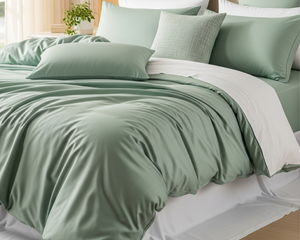
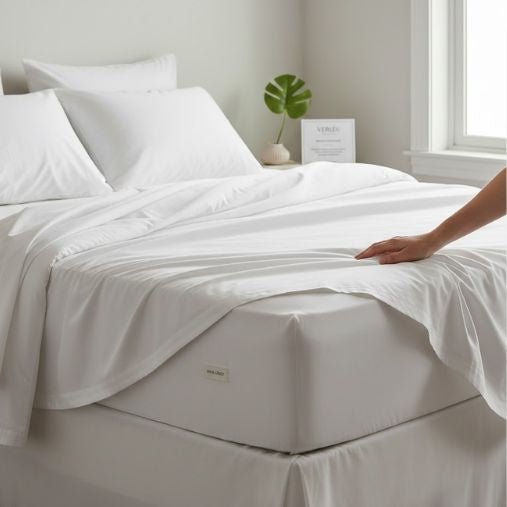
The Héritage Bamboo Sheet Set from Verleu uses 100% organic bamboo lyocell - OEKO-TEX Standard 100 certified - with a fiber construction designed for active moisture management rather than passive breathability.
The Comforter Layer - Where Most Hot Sleepers Get It Wrong
Sheets get most of the attention. The duvet or comforter causes more of the problem.
A comforter that traps heat will overheat you regardless of how well your sheets manage moisture. The sheet draws sweat away, but if the layer above it is creating a sealed microclimate, the body has nowhere to release heat. Both layers have to work together, or neither works well enough.
Fill material determines most of the comforter's thermal behavior. Down, at the right fill power and weight, is genuinely breathable - a summer-weight down comforter around 400–600 fill power allows air circulation while still providing enough surface contact to feel like a bed rather than nothing. The drawbacks are real: down is expensive, requires dry cleaning, and causes reactions in people with allergies.
Bamboo lyocell fill used in the Héritage Bamboo Comforter combines breathability with the same active moisture management as lyocell sheets. Machine washable, no allergy concerns, and unlike synthetic fill, it doesn't create the static, hot microclimate that wakes people up at 3 AM. The fill does what the sheets are doing: it moves moisture out rather than holding it in.
Weight matters too, and for hot sleepers, lighter is almost always right. A comforter that feels substantial in the store feels suffocating by midnight. The right weight is one that provides just enough surface contact without creating a sealed environment over the body.
The Duvet Cover and Pillow Cases - The Layers Nobody Thinks About
The cover of a duvet determines whether the fill inside can actually breathe. A heavy cotton sateen duvet cover traps heat even when the fill is genuinely breathable - the exterior of the sleep system becomes the bottleneck. A bamboo lyocell duvet cover keeps the entire outer layer consistent with the fill: moisture-wicking, heat-releasing, not compounding the problem the fill is trying to solve.
Pillow cases are where most people underinvest, and it shows. The face and neck are where blood vessels sit closest to the skin's surface. Temperature regulation at those points affects whole-body sleep quality more than any other contact surface on the bed - including the sheets. A cotton pillowcase that gets damp and stays damp creates a warm, clammy surface against the face for the second half of every night. Bamboo lyocell pillow cases manage moisture at the contact point that most directly affects how hot you feel, which is why replacing the pillow cases often makes a more immediately noticeable difference than replacing the sheets.
When One Partner Sleeps Hot, and the Other Doesn't
This is the bedding problem nobody has a clean solution to, and it's worth being honest about that before claiming bamboo lyocell fixes it.
Separate duvets - each partner with their own comforter, in a shared duvet cover is the most functional approach for couples with significantly different temperature needs. It removes the negotiation over weight and allows each person to use the fill that suits them.
What bamboo lyocell does in this situation is remove the main source of heat buildup from the equation for both partners. It doesn't actively cool the bed - it's not a medical cooling pad. What it does is stop trapping heat and moisture, which tends to overheat the hot sleeper without making the cold sleeper cold. A neutral thermal environment rather than a warm one works for both, which is why bamboo lyocell is the most compatible bedding choice for temperature-mismatched couples. Not a perfect solution. The most workable one available without buying a mattress with dual temperature zones.
Night Sweats Are a Different Problem
Hot sleeping and night sweats overlap, but they're not the same thing, and the distinction matters.
Hot sleeping is a temperature regulation issue - the body generates or retains more heat during sleep than the environment and bedding can dissipate. Better bedding directly addresses the cause.
Night sweats - drenching sweats that wake you up, sometimes in a cold room often have underlying causes: hormonal changes, certain medications, infection, sleep apnea. Bamboo lyocell bedding reduces the severity of the experience for most people because it moves moisture away from the skin rather than letting it accumulate. It doesn't eliminate night sweats with a medical cause. What it does is stop the bedding from being a contributing factor on top of whatever else is causing them. If night sweats are persistent and severe, that's a conversation for a doctor, not a bedding retailer.
What to Actually Buy If You Sleep Hot
The combination that works for most hot sleepers: bamboo lyocell sheets, bamboo lyocell pillow cases, a lightweight bamboo lyocell comforter, and a bamboo lyocell duvet cover. Every contact point is in the same moisture-managing fiber, so the system works as a system rather than each layer working against the others.
If you want to test before committing to everything at once, start with the sheets and pillow cases. These are the surfaces your body is in direct contact with all night. The improvement in moisture management is noticeable from the first wash - and bamboo lyocell gets softer with each wash rather than degrading, which means what arrives isn't the fabric at its best. That's the opposite of what most people expect from new bedding, and it's the opposite of what bamboo viscose does.
The full Héritage bedding collection covers all four pieces in the same organic lyocell, OEKO-TEX certified, with a 30-night risk-free trial. If you're also looking at current deals across the range, Verleu periodically discounts the full system - worth checking before buying each piece separately.
The Bedding Decision, Stripped of the Marketing
Hot sleepers don't need sheets that are cooler in a marketing sense. They need bedding that manages what the body actually does during sleep - generates heat, produces moisture, and needs both to go somewhere other than the sleep surface.
Microfiber makes this worse. It's synthetic, it doesn't breathe, and no amount of "moisture-wicking" marketing language changes what synthetic fibers do to trapped heat. High thread count sateen cotton makes it worse too - denser weave, more heat retention, despite the premium price. Bamboo viscose improves things temporarily, then degrades. The fabrics with actual staying power for hot sleepers are percale linen and bamboo lyocell. Between those two, lyocell starts soft rather than requiring months of washing before it's tolerable. The fan is treating the symptom. The bedding is the cause.


